
Stroke Ischemic events, brain hemorrhage and recovery after stabilization
This cerebrovascular emergency happens when blood flow to part of the brain is blocked or when a blood vessel ruptures and causes bleeding. Sudden facial or arm weakness, speech difficulty, vision change or loss of balance needs urgent medical assessment. After the acute phase is stabilized, the focus shifts to understanding the cause, reviewing investigations, rehabilitation and reducing the risk of another event.
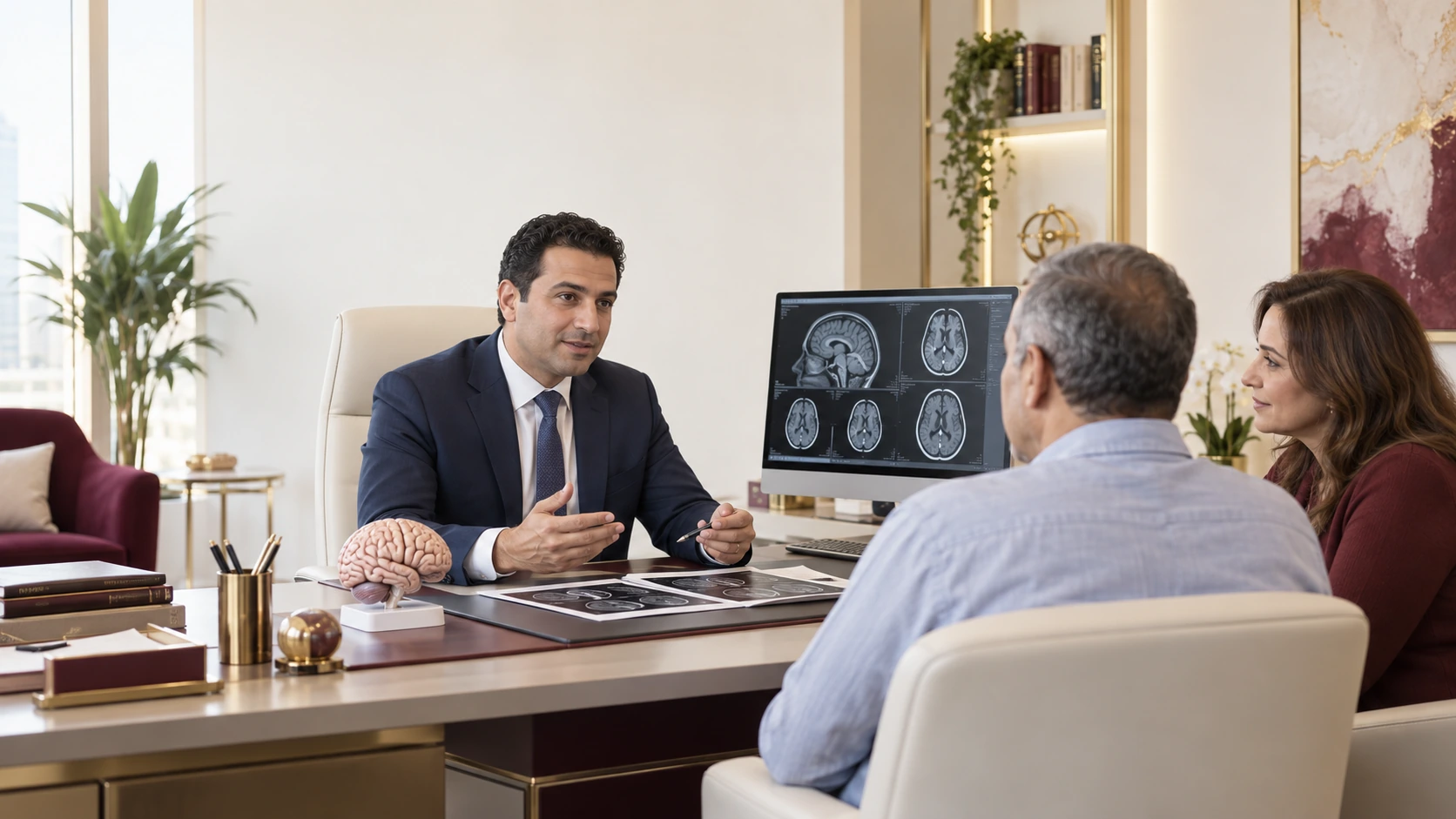
Warning signs every family should know
Recognize Stroke with BE FAST
Not every sign has to appear at the same time. Sudden changes in balance, vision, the face, arm strength or speech should be treated seriously because faster assessment can change treatment options and outcome.
Why symptoms alone are not enough
Stroke Types: Ischemic, Hemorrhagic or TIA?
These conditions can begin with similar neurological symptoms, but their treatment can differ substantially. Diagnosis therefore depends on neurological assessment, brain imaging and relevant investigations rather than guessing from symptoms alone.
Ischemic Stroke
Occurs when an artery supplying part of the brain becomes blocked, reducing blood and oxygen delivery to brain tissue. The location of the blockage, timing and medical context influence acute treatment decisions.
Hemorrhagic Stroke / Brain Hemorrhage
Occurs when a blood vessel ruptures and blood leaks into or around the brain. Symptoms may resemble ischemic events, which is why rapid brain imaging is important.
Transient Ischemic Attack
Sudden neurological symptoms that can resolve after a short period. Their disappearance does not remove the risk; urgent assessment is still needed to find the cause and reduce the chance of a future event.
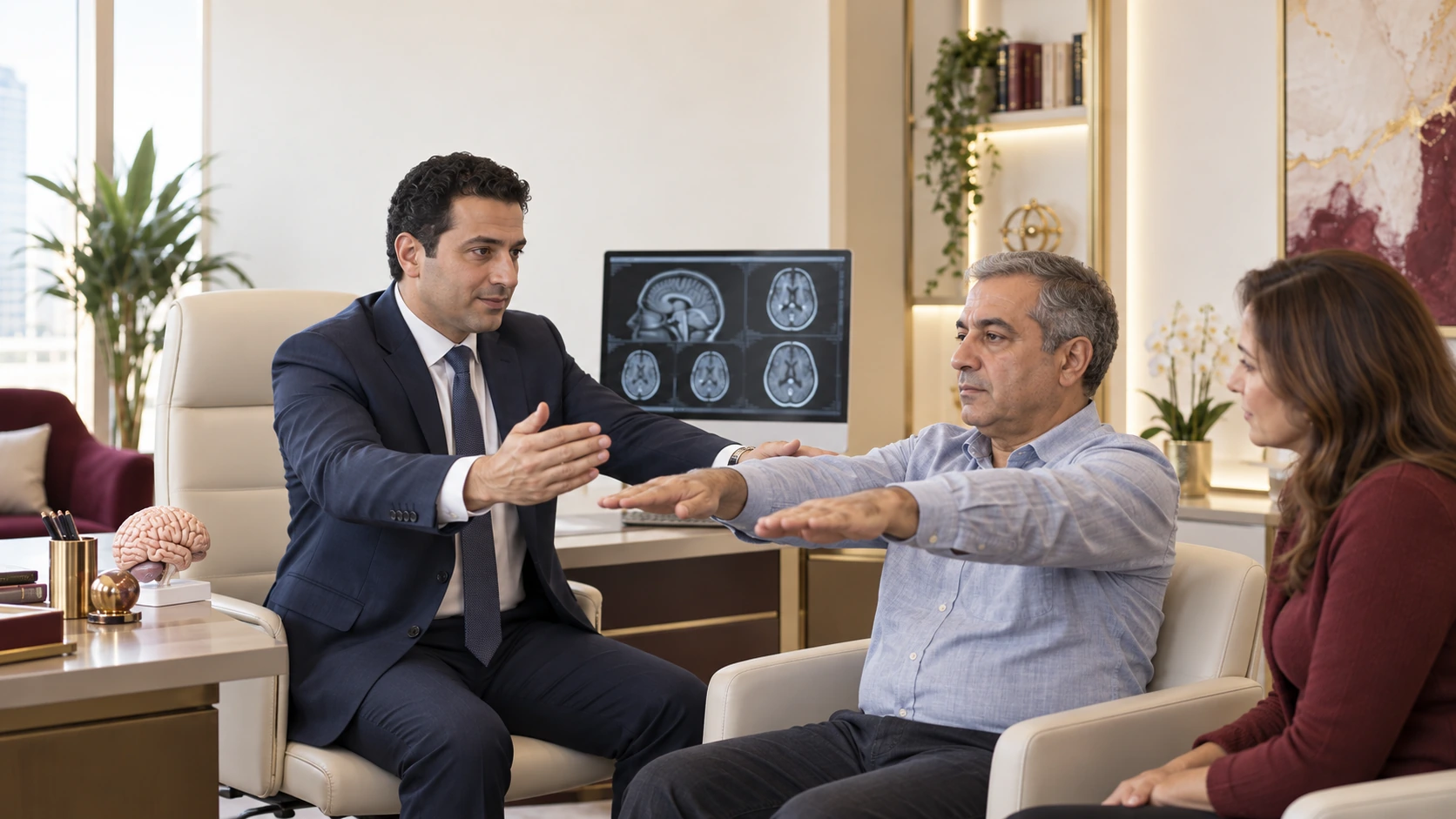
The examination connects symptoms to brain function
Why does assessment begin with a structured neurological examination?
Examination alone does not determine the subtype, but it helps identify which neurological functions are affected and how severe the change is. The clinician may assess strength, speech, sensation, vision, balance, coordination and consciousness depending on the presentation.
- Strength and movement: compare both sides and look for new weakness or drift.
- Speech and understanding: assess word production and ability to understand instructions.
- Vision and balance: some strokes begin with symptoms other than obvious arm weakness.
- Time last known well: when was the patient last seen at their normal baseline?
Imaging can change the decision
What does the medical team look for in diagnostic testing?
The goal is not to order the largest number of tests. It is to answer the questions that change management: Is this ischemia or hemorrhage? What part of the brain is affected? Is there a large-vessel blockage? Are there cardiac, vascular or other causes that require treatment to reduce recurrence?
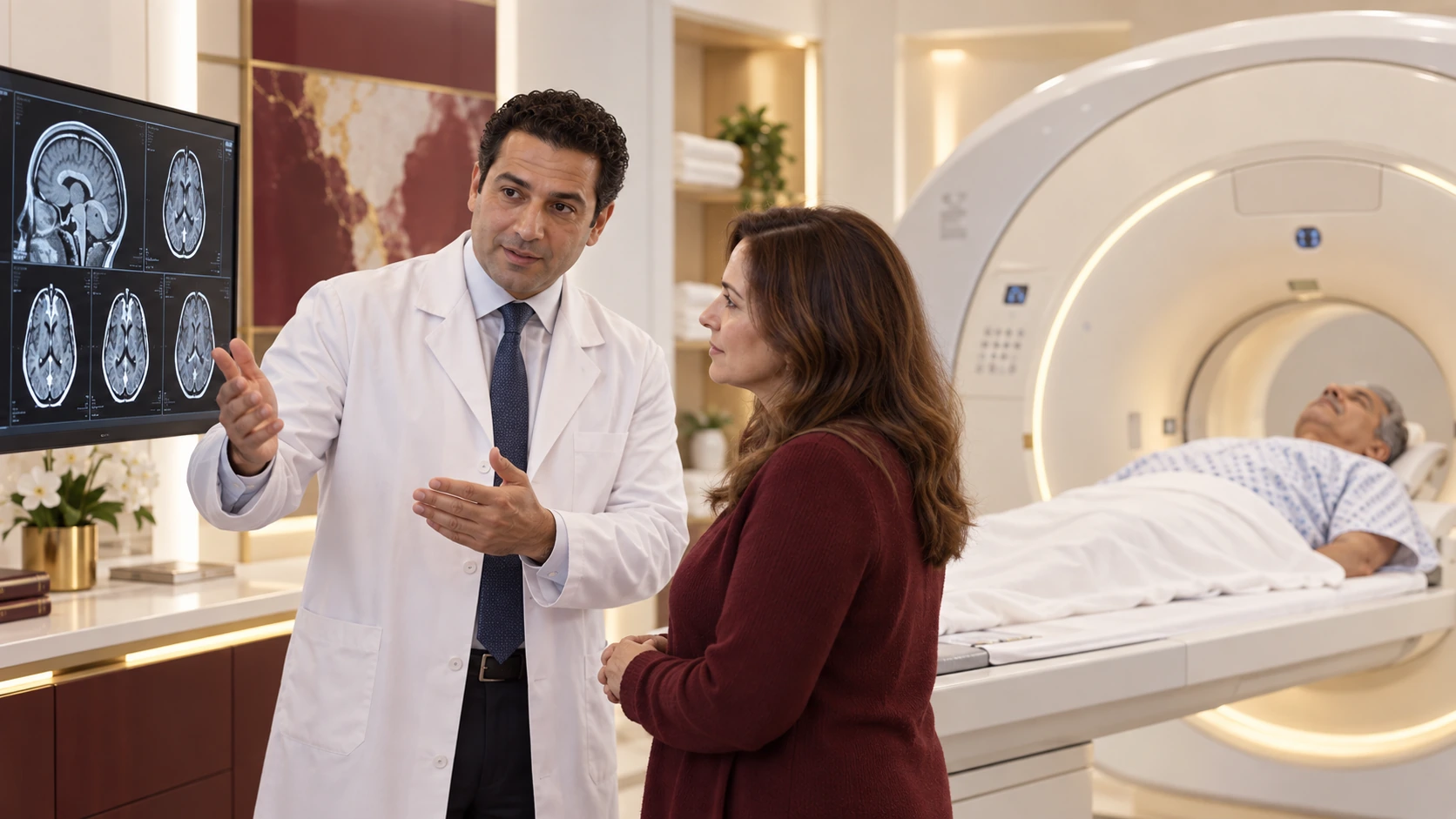
From arrival to a treatment decision
What usually happens in the hospital after a suspected cerebrovascular event?
Details differ between patients, but the general logic is to establish timing, assess neurological function, obtain rapid brain imaging and select acute treatment rather than treating every case in the same way.
Establish symptom onset
When did symptoms begin, or when was the patient last known to be at their normal baseline?
Rapid neurological and general assessment
Consciousness, speech, strength, vision and balance, together with blood pressure, glucose and general medical status.
Imaging and targeted investigations
Differentiate ischemia from hemorrhage and identify vascular or other causes that may need additional testing.
Treatment and post-acute planning
Acute treatment depends on subtype, followed by complication prevention and preparation for rehabilitation and follow-up.
Acute hospital treatment
Depends on subtype, time of onset, imaging, contraindications and vascular findings. Selected patients may be candidates for clot-targeted medication or endovascular treatment, while others need a different pathway.
Prevent complications during stabilization
Management may include blood pressure, glucose, oxygenation, temperature, swallowing, mobility and other issues according to the patient's clinical status.
Identify the cause to reduce recurrence
This can include evaluating the heart, rhythm disorders, arteries and vascular risk factors, then selecting medication or other treatment according to the identified cause.
Focus on function, not imaging alone
Brain imaging is one part of the story. Mobility, communication, swallowing and independence in daily activities strongly influence rehabilitation and follow-up planning.
After the acute phase has stabilized
Stroke Recovery is more than waiting for improvement
Once the patient is medically stable, the question becomes: which functions were affected, and what can be recovered or improved? Rehabilitation may involve physical therapy, occupational therapy, speech and language therapy, or swallowing assessment depending on the deficits and patient goals.
- Mobility and balance: progressively rebuild safe sitting, standing and walking.
- Arm and hand: targeted work on strength, coordination and daily activities.
- Speech and language: assess communication, comprehension and expression when affected.
- Swallowing: assess promptly when coughing, choking or difficulty eating or drinking is present.

Follow-up after discharge
What should be reviewed in the weeks after discharge?
Follow-up is more than asking whether the patient feels better. Hospital reports, medication, mobility, swallowing, speech, memory and any changes since discharge should be reviewed together.
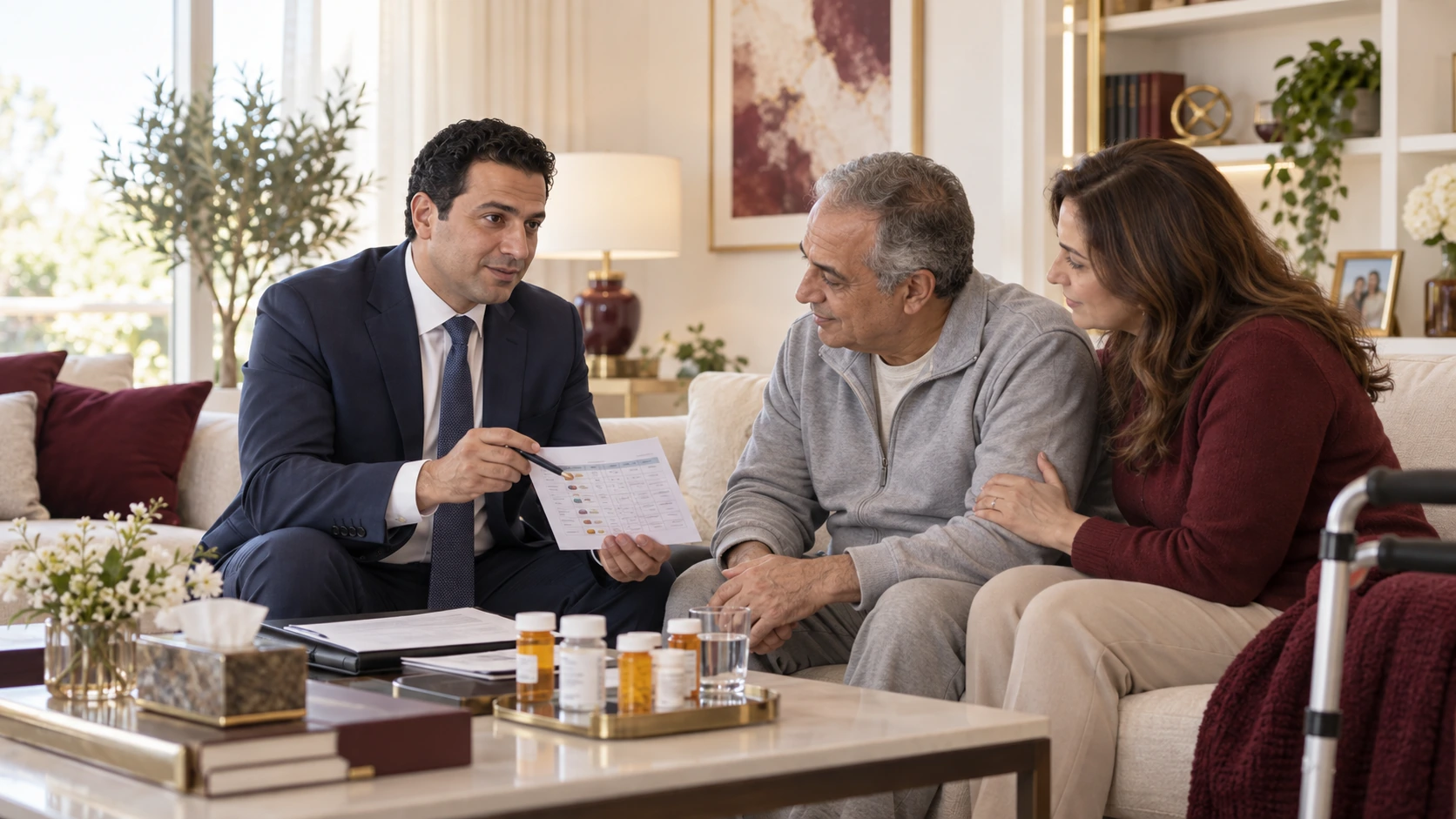
Secondary prevention is part of long-term care
Reducing the risk of another Stroke begins with understanding the cause
There is no single prevention list for everyone. Once the cause and risk factors are identified, treatment, monitoring and lifestyle recommendations can be tailored to the patient's medical situation and functional ability.
Continue by stage of care
Useful next steps after discharge
These links focus on the questions a patient and family may need from the acute stage through recovery and follow-up.
Trusted medical references
External resources for general education about warning signs, diagnosis, recovery and aspirin safety. They do not replace individual medical assessment.
Questions families ask after discharge
Frequently Asked Questions About Stroke
These answers are for general education and should not be used to make an individual treatment decision without the treating medical team.
What is the difference between an ischemic stroke and a brain hemorrhage?
An ischemic stroke is caused by blockage of a blood vessel, while hemorrhagic stroke is caused by a ruptured blood vessel and bleeding in or around the brain. Symptoms can overlap, so brain imaging is essential for safe diagnosis.
If stroke symptoms disappear after a few minutes, is the danger over?
No. Brief symptoms can represent a transient ischemic attack (TIA), which is a medical emergency and needs urgent assessment even if the person returns to normal.
Should I take aspirin if I think I am having a stroke?
Do not start aspirin on your own when stroke is suspected. Some strokes are caused by bleeding, and aspirin can make a bleeding stroke worse. Emergency assessment is needed first.
Does every stroke patient need CT, MRI and every heart test?
No. Testing depends on symptom timing, examination, initial imaging and the suspected cause. The aim is to choose investigations that answer useful clinical questions rather than perform every test for everyone.
When does rehabilitation begin after stroke?
Rehabilitation planning begins as soon as the patient's medical condition allows, but timing, intensity and therapy type vary. The plan can involve mobility, arm and hand function, daily activities, speech, language and swallowing.
Why is neurology follow-up useful after discharge?
Follow-up connects the cause of the stroke with hospital reports, medication and current symptoms, reviews risk factors and new neurological changes, and coordinates further testing or rehabilitation when needed.
Can a home neurology visit be appropriate after stroke?
It may be appropriate for selected stable patients after the acute phase when travel is difficult, provided the required assessment can be performed safely at home. New sudden neurological symptoms should not wait for a home visit.
When should a stroke survivor return to emergency care after discharge?
Urgent assessment is needed for new sudden weakness, numbness, speech difficulty, vision change, balance problems, or an acute decline in consciousness or general condition.
After the acute phase is stable, turn scattered reports into a clear follow-up plan
Hospital reports, brain imaging, medication and current symptoms can be reviewed together to identify the need for neurological follow-up, rehabilitation, swallowing assessment or further investigation.