
01
Urine leakage with coughing or exertion
A common stress-incontinence pattern that may benefit from supervised muscle training in suitable cases.
Symptoms such as urinary leakage, urgency and frequency, difficulty controlling bowel movements, pelvic pain or persistent pelvic floor tightness can arise from weakness, overactivity, poor coordination, neurological conditions or structural causes. Rehabilitation therefore starts by identifying the pattern and the likely cause before selecting treatment.

Similar symptoms can have different causes. Assessment aims to identify the pattern that needs treatment and whether another medical specialty should be involved alongside rehabilitation.
A common stress-incontinence pattern that may benefit from supervised muscle training in suitable cases.
A sudden urge that is difficult to postpone or frequent toilet visits that interfere with daily life.
Leakage, urgency or poor muscular coordination during bowel emptying.
Symptoms may be linked to overactive pelvic floor muscles, where more strengthening is not necessarily appropriate.
Strength, coordination and pelvic support can change after pregnancy, childbirth or selected procedures.
Brain, spinal cord or nerve disorders can affect bladder and bowel control and may require coordinated neurological and rehabilitation assessment.
Assessment begins with the type and duration of symptoms and their effect on daily life. Relevant childbirth history, previous surgery, medications, constipation or bowel problems, and neurological conditions are reviewed. Pelvic floor muscle contraction, relaxation and coordination are then assessed as appropriate for the patient.
If symptoms suggest a structural, urological, gynecological, colorectal or neurological problem requiring further diagnosis, the correct pathway begins with appropriate referral rather than simply adding exercises.

Weakness, overactivity, poor coordination, urinary or bowel symptoms, or a neurological factor.
Reduce leakage, improve ability to delay urination, improve relaxation or increase controlled muscle function.
Strength, endurance, relaxation or coordination, together with bladder training or habit changes when appropriate.
Review symptoms, function and adherence, then adjust the programme rather than repeating it without measurement.
Pelvic floor muscle training can include strength, endurance, rapid contraction, breathing coordination and relaxation. For women with stress or mixed urinary incontinence, NICE recommends a supervised pelvic floor muscle training programme of at least 3 months as first-line conservative treatment.

These tools are not routinely required for every patient. Their value is selective, such as helping someone identify an effective contraction or relaxation pattern when this is difficult.

Sensors can display muscle activity on a screen or convert it into a visual signal, helping a patient learn when to contract and when to relax more accurately. It is selected when it adds useful information to training.
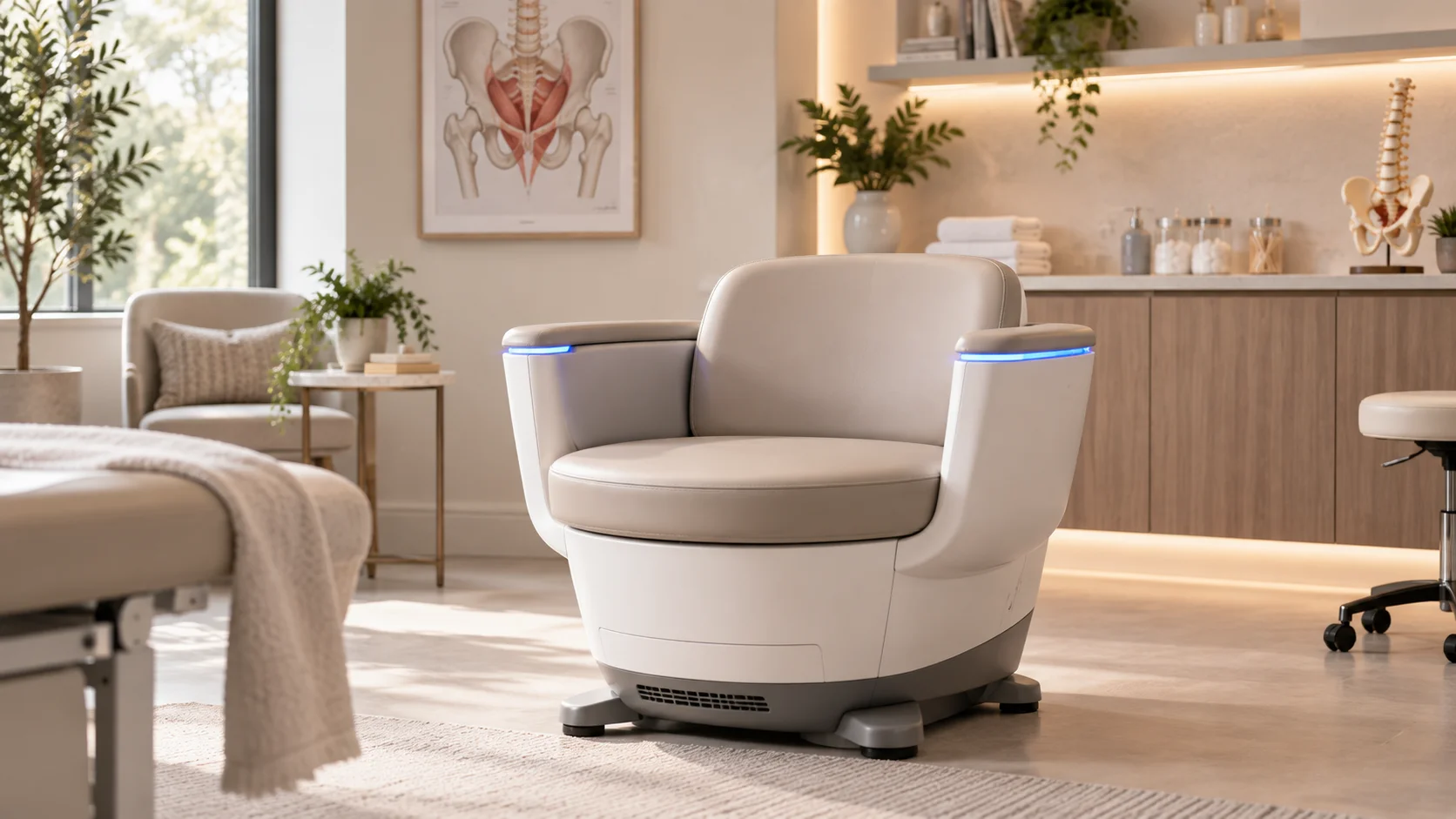
NICE does not recommend electrical stimulation or biofeedback as a routine addition for every pelvic floor programme. These approaches can have a selective role, including for some women who cannot produce an effective pelvic floor muscle contraction.
Bladder and bowel function depend on both muscles and nerves. Control problems can occur with multiple sclerosis, after stroke, with spinal cord disorders or other neurological conditions. In these situations, pelvic floor symptoms should not be considered separately from the underlying neurological problem.

Progress is not judged by impression alone. Changes in leakage, urgency, ability to delay urination, muscle control or relaxation, and the effect of symptoms on activity, sleep and quality of life can be tracked. If progress is limited, the diagnosis, technique and adherence should be reviewed before simply repeating the same plan.
New and sudden bladder or bowel dysfunction, urinary retention, severe low-back or leg pain, numbness around the saddle/genital area, or new leg weakness needs urgent medical assessment to exclude cauda equina syndrome or another serious neurological compression.
Consultant Neurologist, linking neurological conditions with the appropriate rehabilitation pathway rather than treating pelvic floor symptoms as an isolated complaint.
In patients with a neurological background, the key question is whether bladder or bowel changes are part of the neurological condition, what can reasonably benefit from rehabilitation, and what requires additional diagnostic or specialist assessment before treatment continues.
If you have bladder or bowel control problems, pelvic pain or persistent pelvic floor tightness, the first step is to identify the dysfunction pattern and the most appropriate treatment pathway.