
NeuroVisit – Dr.Karim Ashraf/Neuro

Neurological Conditions at NeuroVisit

Neurological Conditions

Start with the symptom or condition you are trying to understand. This guide brings together common neurological conditions and connects symptoms to relevant information, assessment and diagnostic services when they are actually needed.

01 Start with the symptom, not the test name 02 Direct links to conditions and services 03 Assessment differs from one patient to another
Neurological Conditions assessment at NeuroVisit in Cairo

Start with the symptom

What are you experiencing?

Neurological Conditions can begin with similar symptoms even when the causes are different. These links help you navigate to the closest topic; they are not a tool for self-diagnosis.

Symptoms that need urgent assessment: sudden weakness on one side, facial droop or sudden speech difficulty, loss of consciousness, a prolonged seizure, or a sudden extremely severe headache. Do not wait for a routine appointment in these situations.
HEADACHE
01 — HEADACHE

Headache & Migraine

Headache is not one single condition. The pattern, duration, associated symptoms, medication use and warning signs help determine whether clinical assessment is enough or an additional investigation is needed.

Explore Headache Information →

02 — MEMORY & COGNITION

Memory Changes, Dementia & Alzheimer's Disease

Forgetfulness can be temporary or related to sleep, medication, mood or different neurological causes. A useful assessment looks at changes in memory, behavior and everyday function rather than relying on one impression or one test.

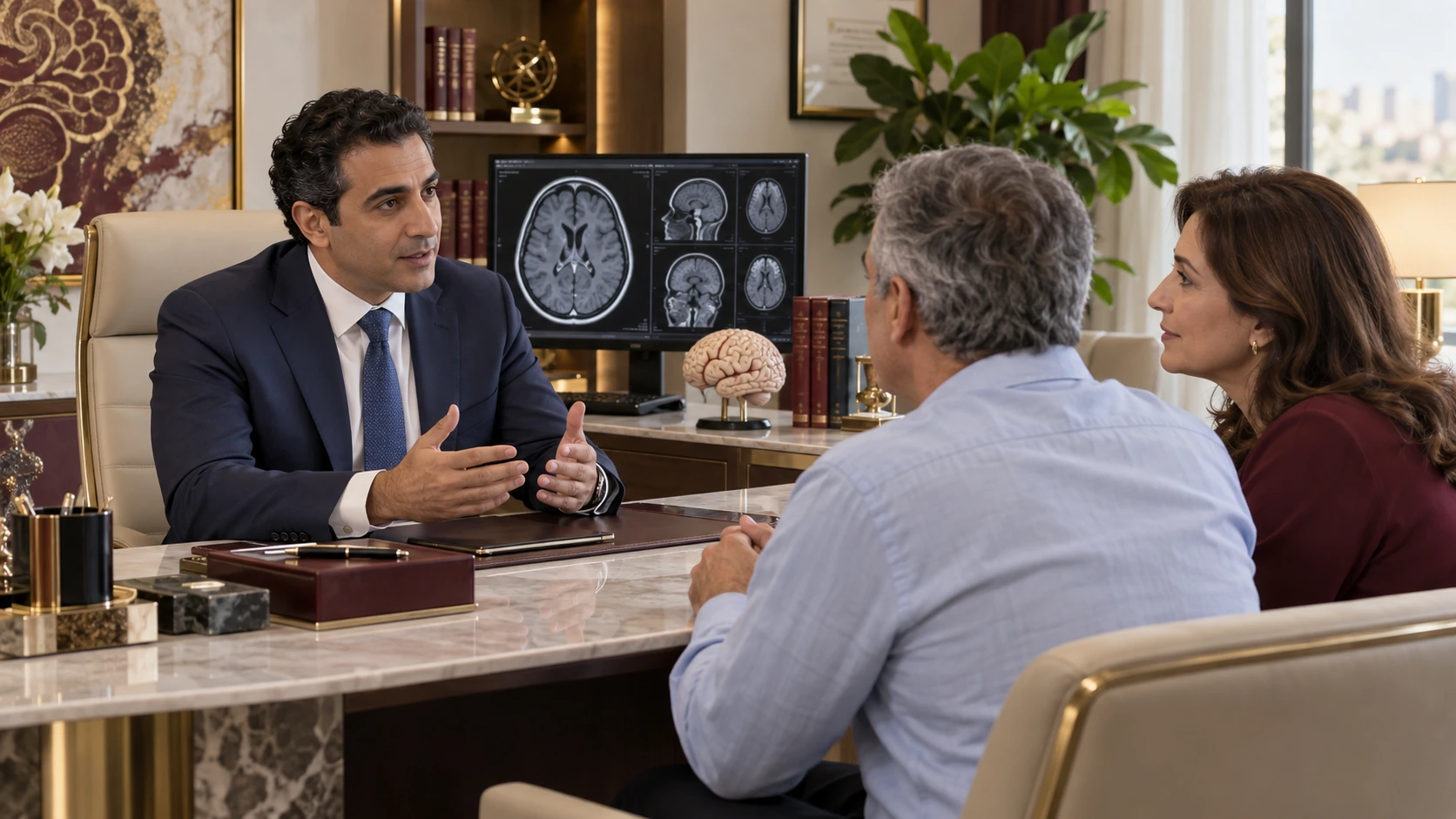
Neurological assessment of memory changes with patient and family
Assessment of movement, walking and balance in a neurology patient
03 — MOVEMENT

Parkinson's, Tremor & Movement Disorders

Tremor, slow movement, stiffness and unsteady walking are not one diagnosis. Neurological examination looks at the pattern of movement, strength, balance, medications and associated features to understand the likely cause.

04 — CEREBROVASCULAR

Stroke & Brain Hemorrhage

After the acute stage, follow-up can include questions about the cause, prevention of another event, movement, swallowing, speech, medication and rehabilitation. New sudden neurological symptoms need an emergency pathway, not routine follow-up.

Explore Stroke Information →
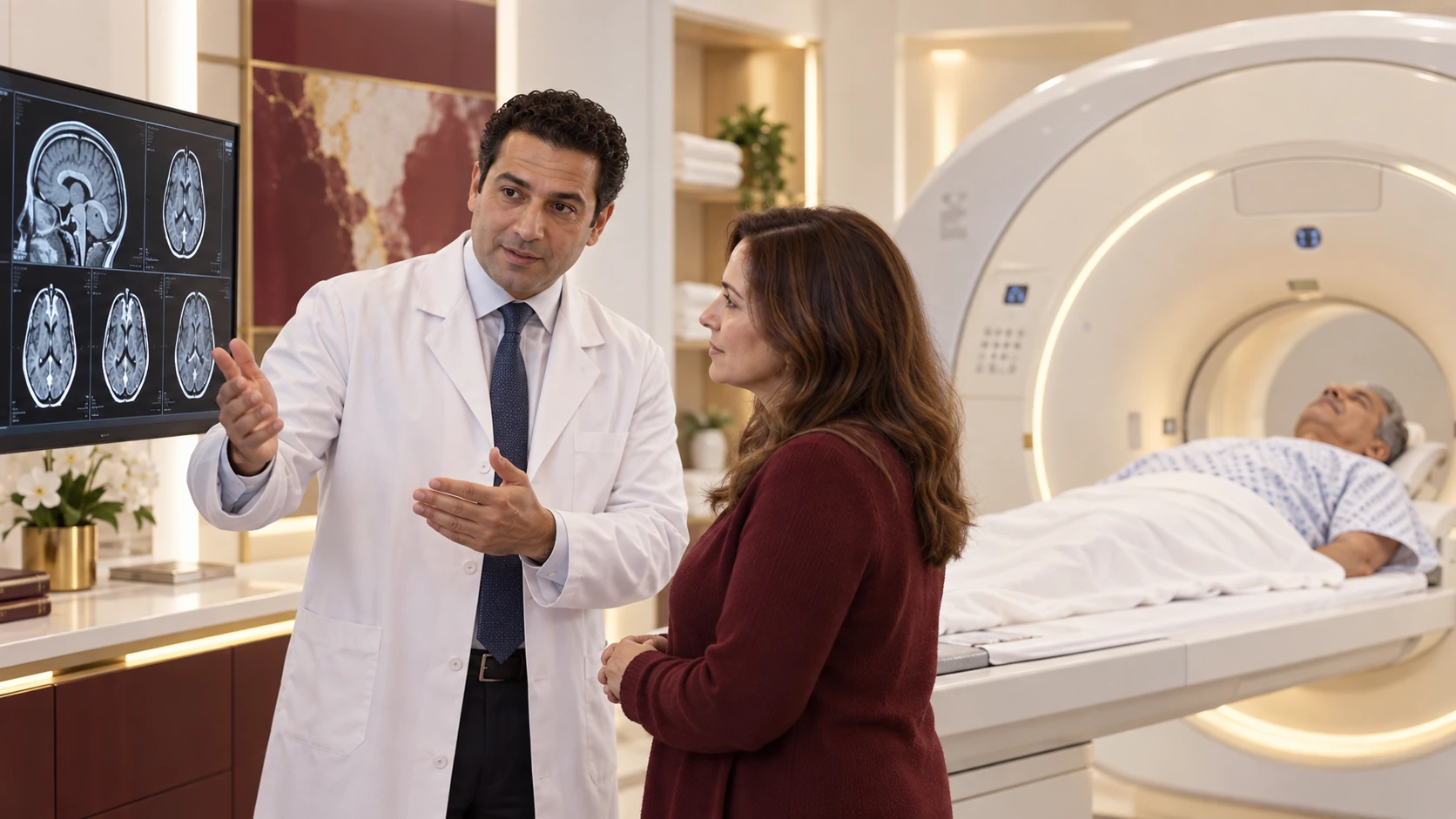
Brain imaging review during stroke and neurological assessment
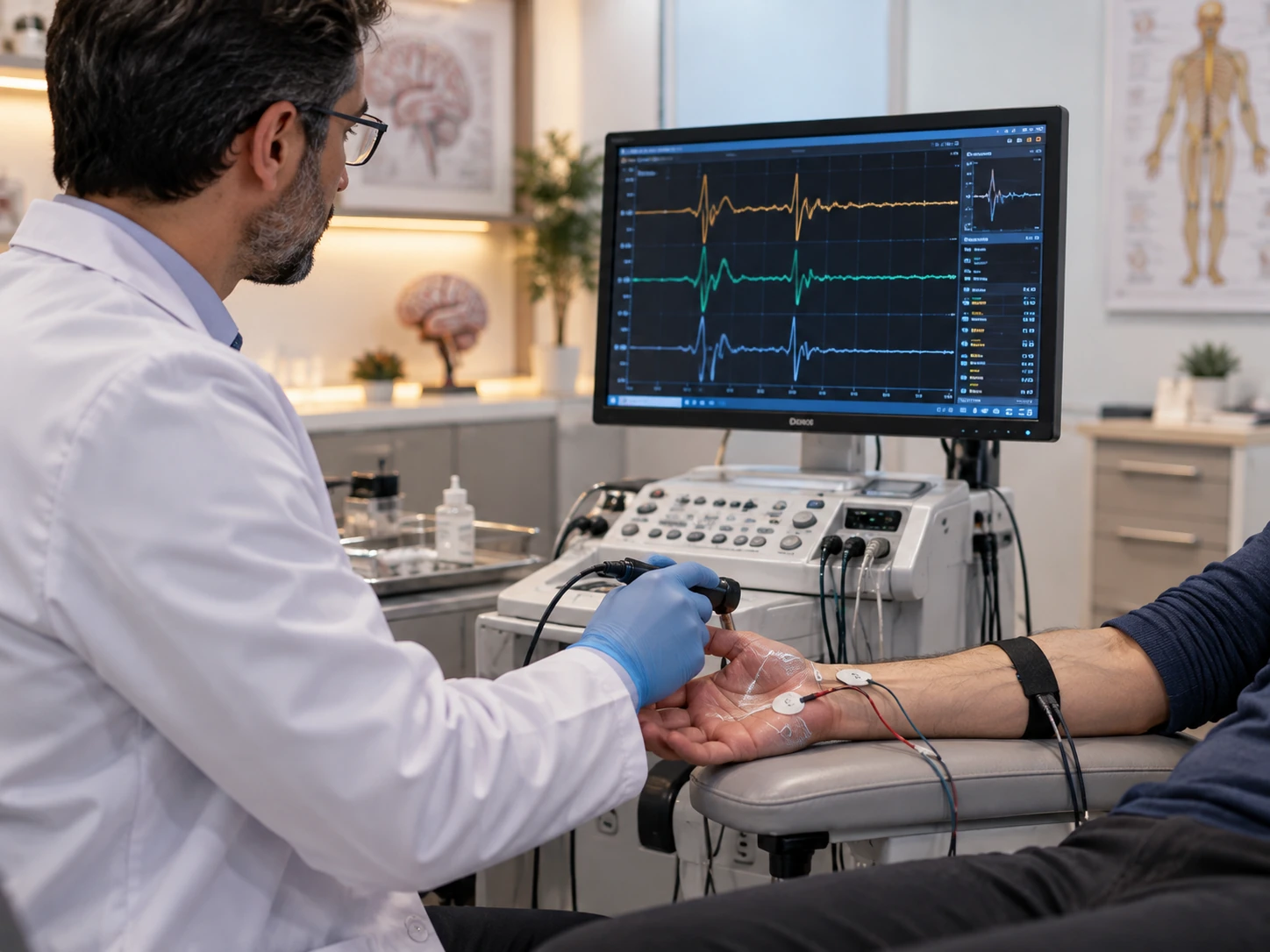
Peripheral nerve assessment with NCS and EMG
05 — PERIPHERAL NERVES

Peripheral Neuropathy, Nerve Pain & Numbness

Numbness, burning pain or weakness can arise from peripheral nerves, nerve roots, muscles or other causes. The clinical examination helps decide whether NCS/EMG, laboratory tests, imaging or another investigation is likely to answer the question.

Explore Nerve Pain Information →
06 — BRAIN ELECTRICAL ACTIVITY

Epilepsy, Seizures & Altered Awareness

What happened before, during and after an episode is an important part of assessment. EEG can be useful in selected situations, but it is interpreted together with the history and examination rather than acting as a stand-alone diagnosis.

Explore Epilepsy Information →
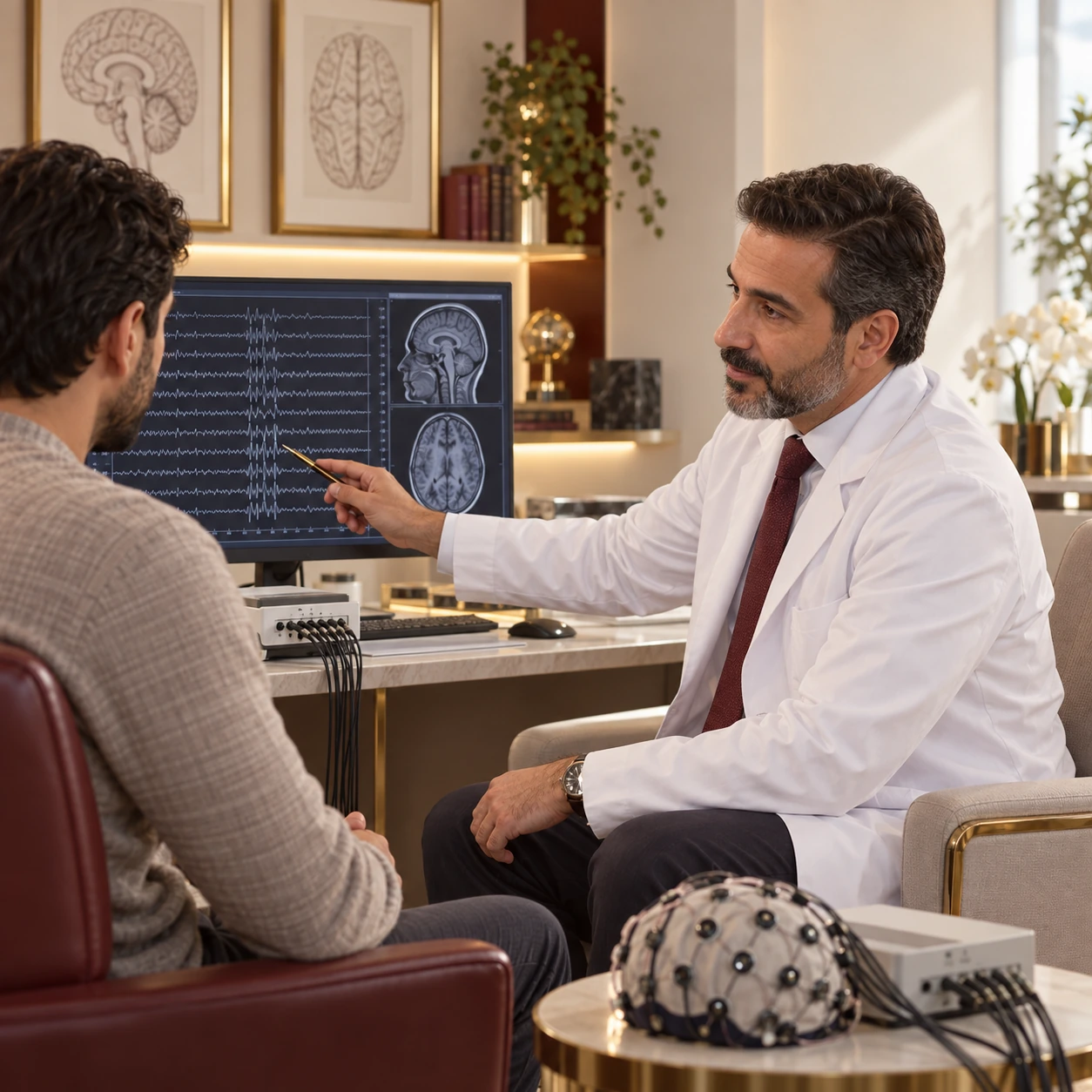
Epilepsy assessment and EEG in a neurology clinic

Other neurological conditions

Neurological Conditions extend beyond the six common groups above

If you are not sure where your symptoms fit, start with a neurological assessment rather than selecting a test yourself.

11Pelvic Floor Rehabilitation in Selected CasesWhen bladder or bowel function overlaps with neurological or functional factors.→

From symptoms to a clearer decision

How are Neurological Conditions evaluated?

The process should not begin by choosing EEG, MRI or NCS yourself. It begins with the symptoms and medical context, then a neurological examination, followed by testing only when it can add useful information.

01

Understand the symptoms and history

When symptoms started, how they changed, medications, other conditions and what is different from usual.

02

Neurological examination

Strength, sensation, movement, balance and the neurological functions relevant to the complaint.

03

Select testing or follow-up when needed

The next step may be follow-up alone, EEG, NCS/EMG, imaging or laboratory tests depending on the clinical question.

Diagnostic tests and services

A test is not the goal by itself

When evaluating Neurological Conditions, each investigation answers a different medical question. Testing is selected after symptoms and examination are considered, then the result is interpreted inside the full clinical picture.

Simple principle: choose the test after identifying the clinical question, not because one symptom happens to sound like the name of a test.
Neurological diagnostic testing at NeuroVisit

Dr. Karim Ashraf

Evaluating Neurological Conditions starts with the full story

The aim of a consultation is not to attach a diagnosis as quickly as possible. It is to connect symptoms with their timeline, examination and previous results, then decide what needs further investigation and what can be managed with a clear treatment and follow-up plan.

Direct neurological assessmentStrength, sensation, movement and functions relevant to the complaint.
Testing when indicatedEEG, NCS/EMG and sleep studies according to clinical need.
Connected follow-upResults are interpreted with symptoms and changes over time rather than in isolation.
Dr. Karim Ashraf, Consultant Neurologist at NeuroVisit

Questions before booking

Direct answers to help you start in the right place

If you cannot find your symptoms among the Neurological Conditions listed here, that does not mean you should choose a diagnostic test yourself. Describe the symptoms and start with assessment.

Does every headache need brain imaging or an EEG?
No. Many headaches are assessed first from the history and neurological examination. Imaging or EEG is requested when there is a specific clinical indication or diagnostic question.
Does numbness always mean peripheral neuropathy?
No. Numbness can be related to peripheral nerves, nerve roots, focal nerve compression, metabolic causes or other conditions. The pattern and examination help determine the next step.
What is the difference between EEG and NCS/EMG?
EEG records electrical activity from the brain. NCS assesses signal conduction in peripheral nerves, while EMG evaluates electrical activity in muscles. Each test answers a different clinical question.
When is an in-person neurology visit more appropriate than an online consultation?
When the decision depends on a direct neurological examination of strength, sensation, movement or balance, an in-person assessment is generally more appropriate. Selected follow-up and result-review visits may be suitable remotely.
What should I prepare before a neurology appointment?
Bring a medication list, previous reports, available scans and laboratory results, and a brief timeline of how the symptoms began and changed. If an event is intermittent, a safe video recording may sometimes be useful.

Not sure which Neurological Conditions best match your symptoms?

You are not expected to know the diagnosis or test name before booking. Start by describing the problem, and the appropriate next step can be decided from there.