
Insomnia
Difficulty falling asleep, staying asleep or waking too early, together with meaningful daytime impact.
Sleep disorders are not limited to insomnia. Difficulty falling asleep, repeated awakenings, loud snoring and breathing pauses, excessive daytime sleepiness, disrupted sleep timing and unusual movements during sleep represent different patterns that require different approaches.

Classification matters because an approach that helps one problem may not fit another. Assessment starts with what happens at night and how you function the next day.
Difficulty falling asleep, staying asleep or waking too early, together with meaningful daytime impact.
Repeated loud snoring, choking, gasping or witnessed breathing pauses may indicate sleep-related breathing problems.
Difficulty staying awake or a tendency to fall asleep during the day despite trying to obtain enough sleep.
The internal sleep-wake schedule does not align with the timing required for work, study or daily life.
Uncomfortable limb sensations or repeated movements can interrupt sleep and reduce sleep quality.
Selected episodes of walking, talking or complex movements during sleep require assessment based on the event and clinical context.
Insomnia can involve difficulty falling asleep, repeated awakenings or waking earlier than intended and being unable to return to sleep. The key issue is not sleep duration alone, but how often the problem occurs and how much it affects energy, concentration, mood and daytime function.


Excessive daytime sleepiness can result from insufficient sleep, but it can also occur with fragmented sleep, sleep apnea, medication effects, circadian rhythm disorders or other sleep conditions. One useful distinction is whether you mainly feel tired or whether you actually struggle to stay awake in situations where you normally should.
Snoring is common, but it becomes more clinically important when it is frequent and loud or occurs with witnessed breathing pauses, choking or gasping, morning headaches or significant daytime sleepiness.
A partner or family member may notice repeated stopping and restarting of breathing during sleep.
Waking with a choking sensation or gasping for air should be discussed during assessment.
Fragmented sleep can appear as fatigue, concentration difficulty or unintended sleep during the day.
Body weight, age, anatomy and certain health conditions can influence the likelihood of obstructive sleep apnea.
There is no fixed test panel for all Sleep Disorders. The process begins with the story: sleep timing, how long it takes to fall asleep, awakenings, snoring, movements or nighttime events, and how you function during the day.
Difficulty falling asleep? Repeated awakenings? Sleepiness? Snoring? Nighttime behavior? Each pattern changes the pathway.
Sleep schedule, naps, caffeine, shift work, medication and associated medical conditions.
History or a sleep diary may be enough, while selected cases may need PSG, a home study or another test.
Behavioral treatment, sleep timing changes, breathing treatment or management of another underlying condition.
Full polysomnography records several physiological signals during sleep, which can include brain waves, breathing, oxygen level, heart rate and muscle activity depending on the study protocol. It is used when the clinician needs information that cannot be obtained from the symptom history alone.
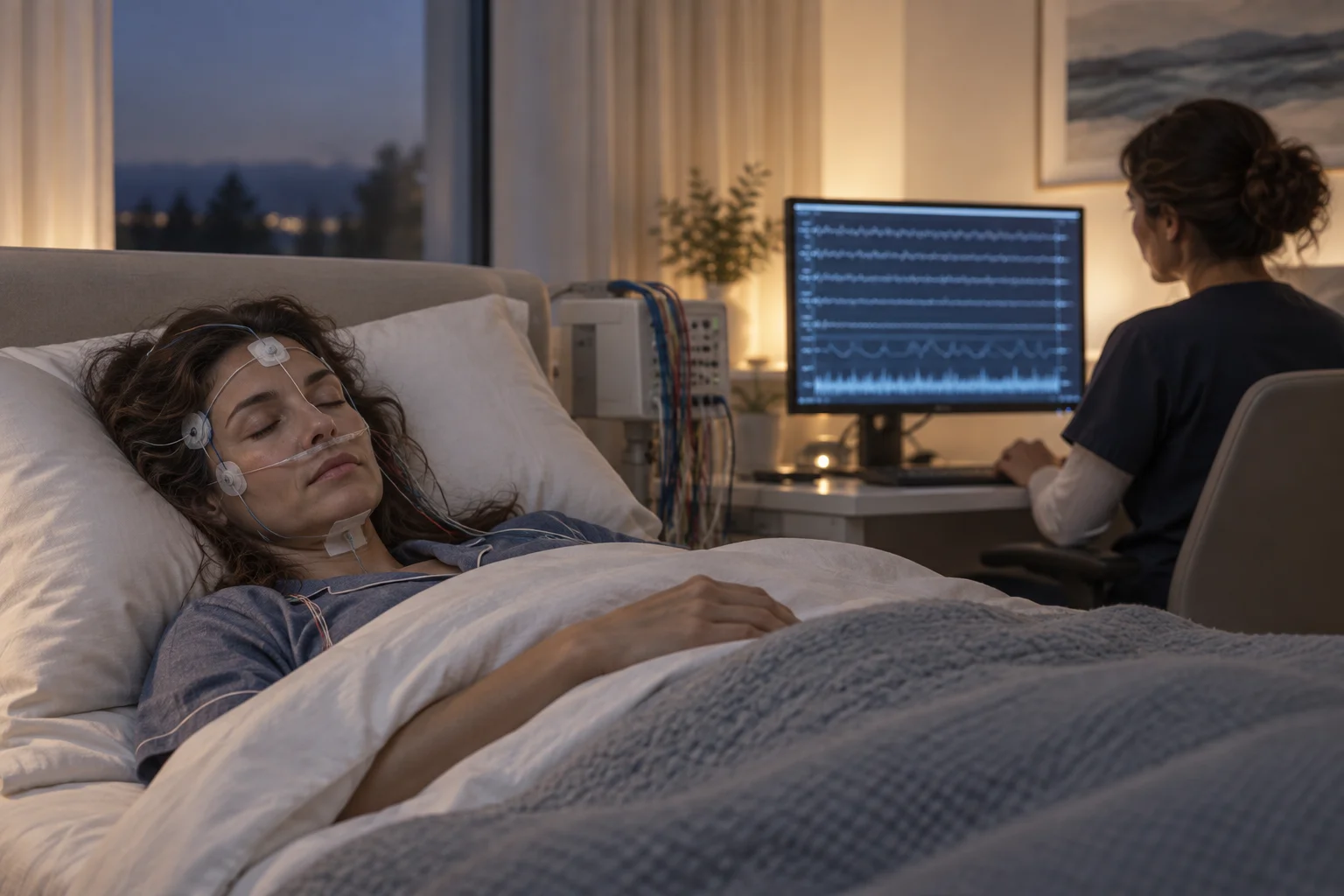
Healthy sleep habits matter, but sleep-hygiene advice alone is not a complete treatment for every disorder. The pattern determines whether treatment is behavioral, breathing-related, medication-based or focused on another medical condition.
CBT-I is an important first-line approach, together with addressing behaviors and factors that maintain insomnia.
Treatment depends on severity and cause and may include lifestyle measures, positive airway pressure devices or other options.
Management may involve carefully changing the timing of light exposure, sleep and wake time according to the disorder.
Pain, medication effects and medical or mental health conditions may need treatment alongside the sleep problem itself.
Seek medical assessment if sleepiness is severe enough to affect driving or work, if there are repeated breathing pauses or choking during sleep, dangerous nighttime behaviors, or sleep-related events associated with loss of consciousness, seizures or new neurological symptoms. Emergencies should not wait for a routine appointment.
The aim is to connect what happens at night with daytime symptoms, medication and associated neurological or medical conditions. The next step may be behavioral treatment, follow-up, a sleep study or another diagnostic pathway depending on the clinical picture.

Direct answers to help you choose the right starting point without self-diagnosis or unnecessary testing.
You do not need to know the diagnosis or choose the test before booking. Start by describing the problem, and the appropriate next step can be selected from there.