NeuroVisit – Dr.Karim Ashraf/Neuro

Home neurology care in Cairo and selected Giza areas

Home Neurology Visit in Cairo Specialist neurological assessment when travelling to the clinic is difficult or not appropriate for the patient

A home neurology visit allows the neurologist to review symptoms, medical history, medications and previous reports, perform the parts of the neurological examination that are appropriate in the home setting, then decide the next step: home follow-up, additional testing, or assessment at a clinic or hospital when needed.

Home care is not a substitute for clinic or hospital care in every situation. Before the visit, the team reviews the reason for the request, the patient's condition and location to decide whether a home assessment is appropriate.
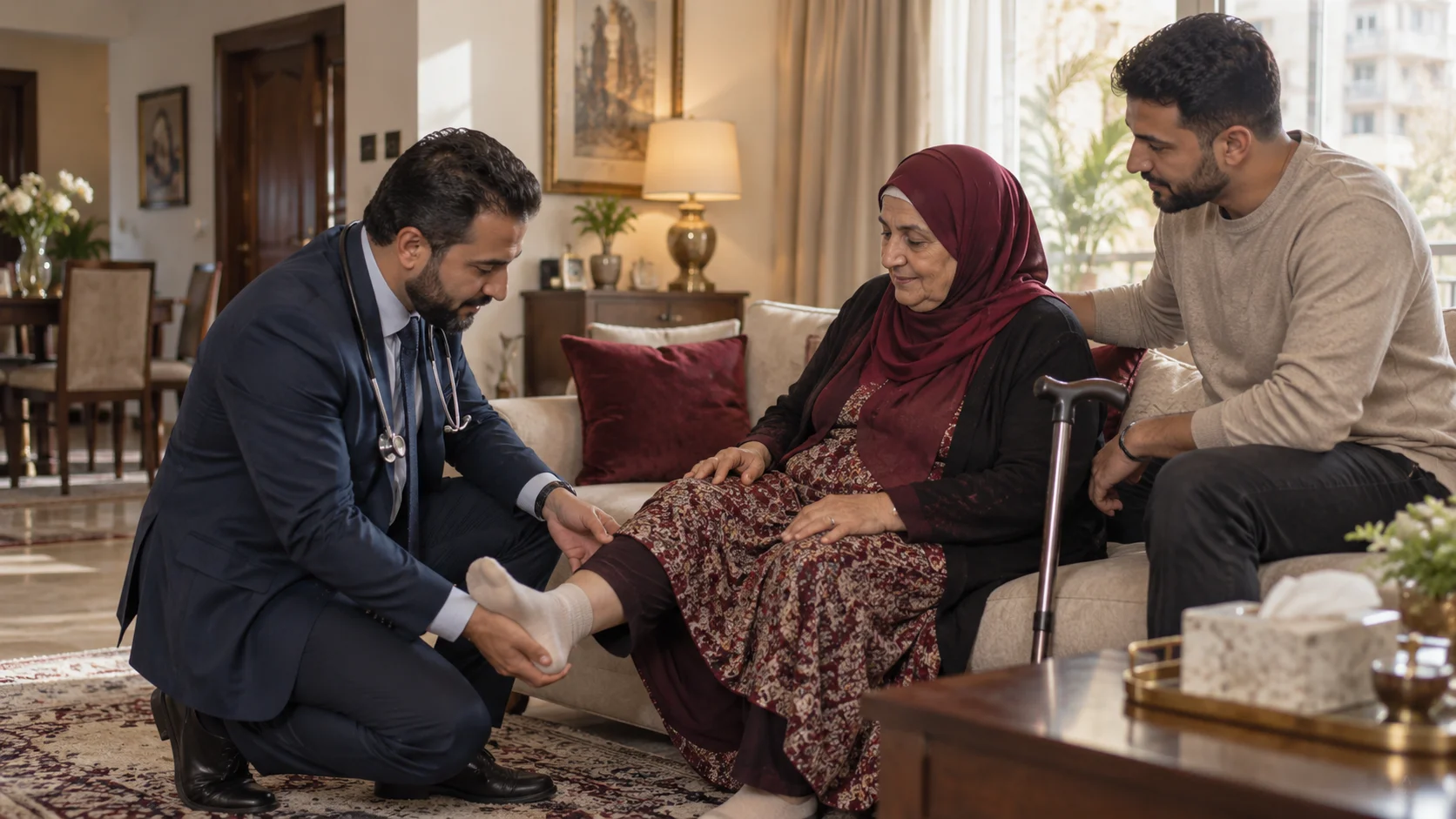
Home Neurology Visit in Cairo for an older patient with family present
01
Specialist neurological assessmentA focused neurology visit rather than a general home consultation
02
Family input when usefulEspecially helpful with older adults, memory problems or limited mobility
03
A clear next stepHome follow-up, further testing, or referral to the appropriate care setting
When does a home neurology visit make sense?

When access to the clinic is the barrier — not the need for a neurologist

Some patients need neurological assessment or follow-up, but travelling to a clinic creates a significant burden for the patient and family. In these situations, a home neurology visit can be practical when the required assessment is appropriate for the home setting.

  • Older adults for whom leaving home is exhausting or requires continuous assistance.
  • Patients with movement problems, weakness or mobility limitations that make transport difficult.
  • Selected memory or behavioral concerns where seeing the patient in their usual environment may add useful context.
  • Post-discharge follow-up when the patient is stable and does not need emergency care or continuous monitoring.
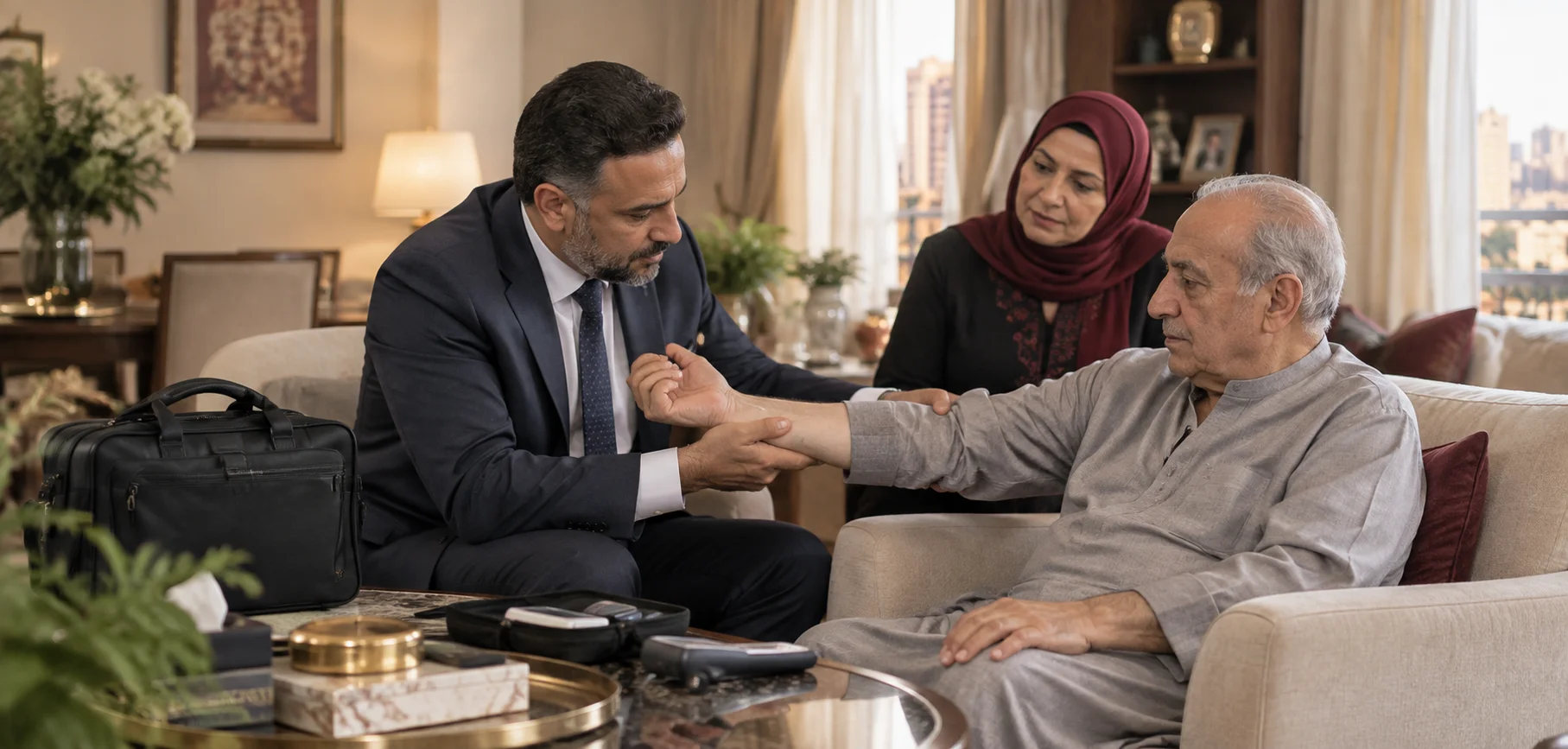
Older patient receiving a home neurology assessment with a family member present
During the visit

What does a neurologist do during a home visit?

The visit is not simply a medication review. It starts with understanding the problem, followed by a focused neurological examination. Depending on the patient, this can include mental status, memory, speech, eye and facial movement, strength, sensation, reflexes, coordination, gait and balance.

Information from family members can be especially useful when the patient cannot fully recall episodes, behavioral changes or the timeline of symptoms.

01

Symptoms and medical history

When symptoms started, how they changed, medications, previous conditions and recent changes.

02

Review reports and imaging

Connect the current examination to previous scans, laboratory results, discharge reports or neurological tests.

03

Focused neurological examination

The clinician selects tests relevant to the complaint instead of using the same fixed checklist for every patient.

04

Plan the next step

Decide what can continue at home and what needs clinic testing, imaging or hospital assessment.

After stroke or when mobility is difficult

Home follow-up can reduce travel burden, but it does not replace urgent care when symptoms worsen

After the acute phase has stabilized, some patients may need neurological follow-up to review strength, movement, medication, swallowing, alertness, memory and rehabilitation planning. Seeing the patient at home can also help the clinician understand how the patient actually moves within the daily environment.

  • Review changes in strength and movement compared with the previous period.
  • Discuss medication, new symptoms and ability to perform daily activities.
  • Assess whether additional testing or specialist input is needed.
  • New sudden neurological symptoms should not wait for a home appointment.
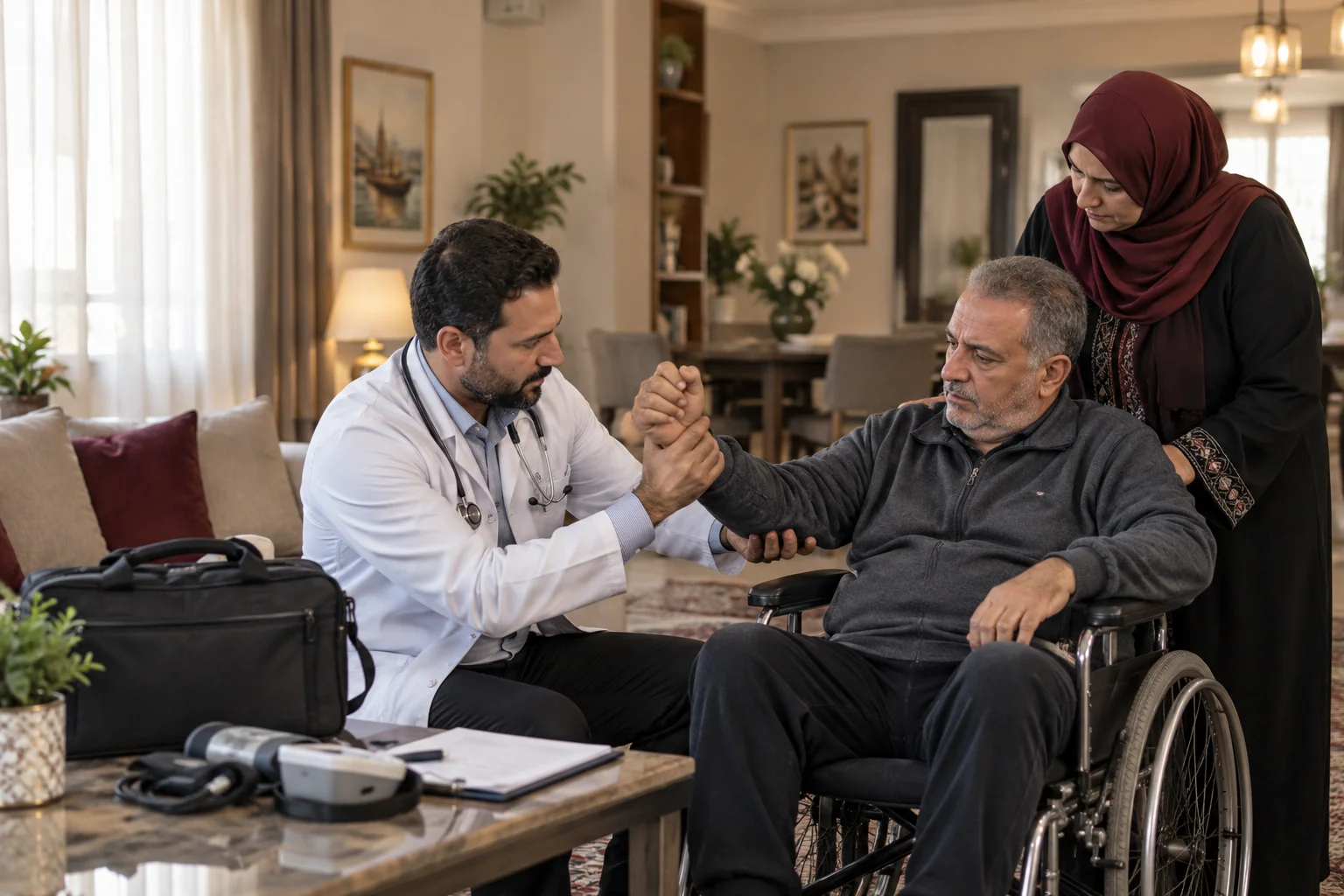
Neurologist checking arm strength during a post-stroke home follow-up visit
When assessment needs more than the clinical examination

Selected neurological tests can sometimes be coordinated at home

Home availability depends on the test type, equipment, patient condition and location. Not every test can be performed at home with the same setup or in every clinical situation.

EEG

Home EEG recording

Selected EEG recording types can be coordinated outside the clinic when the recording type and equipment are appropriate. Home or ambulatory recording may also be useful when a longer recording period is needed in the patient's usual environment.

EEG Test in Cairo →
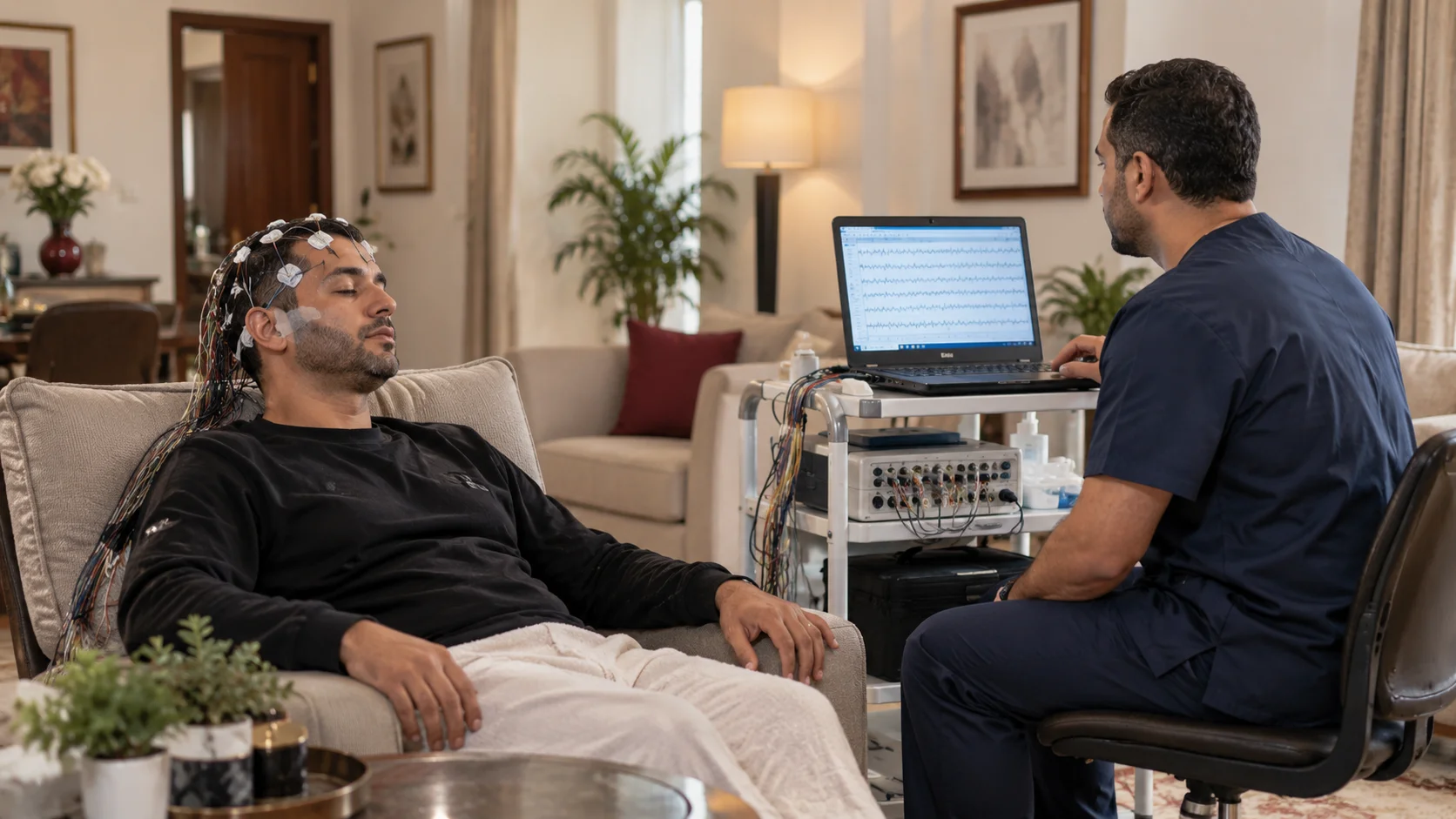
Patient having a home EEG recording with monitoring equipment
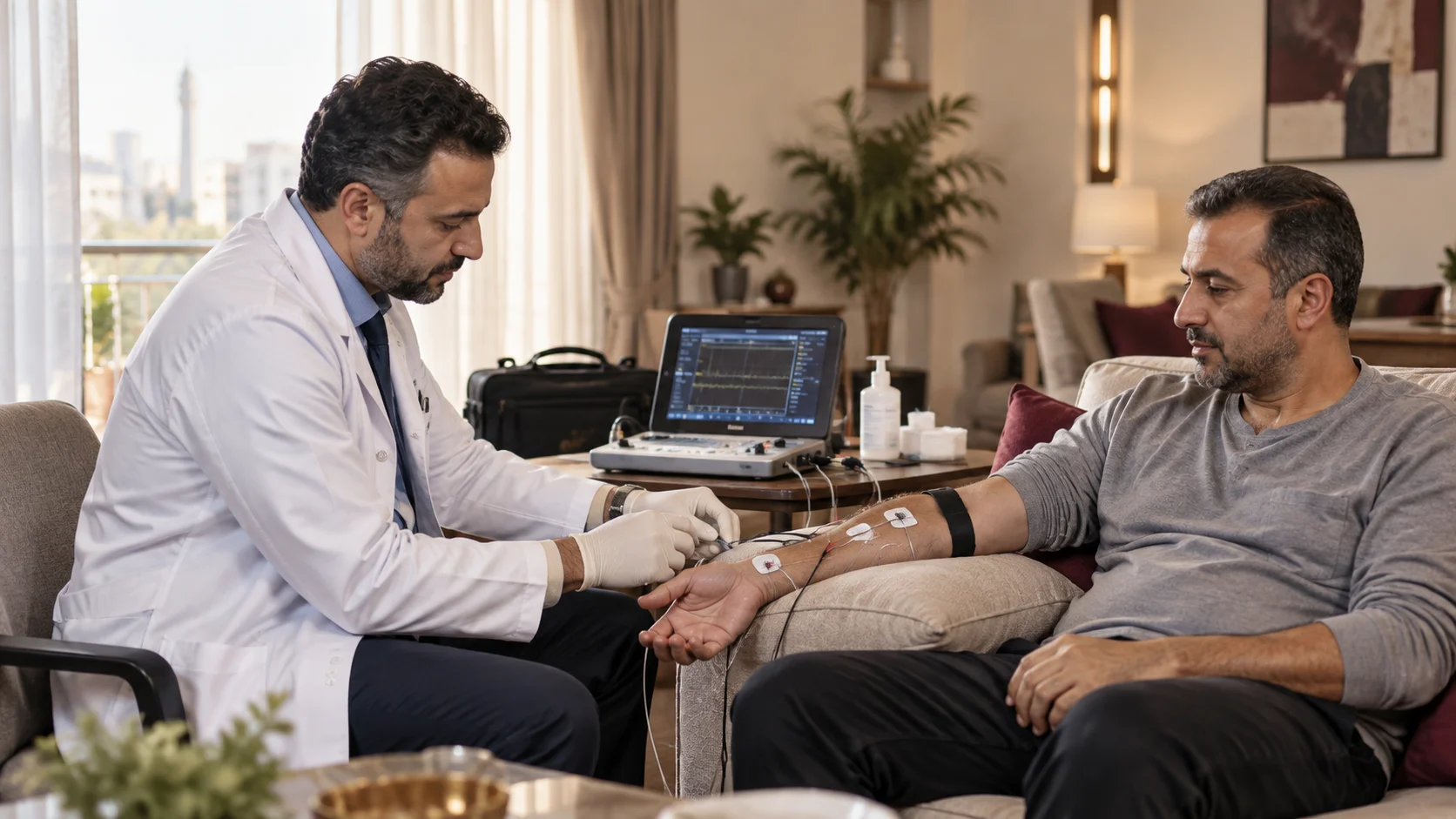
NCS / EMG

Nerve and muscle studies outside the clinic

Selected nerve conduction and muscle studies can sometimes be coordinated outside the clinic when the equipment, protocol and patient situation allow it. The nerves and muscles tested are selected according to the clinical question.

Explore neurophysiology services →
Home nerve conduction study NCS for a patient

Home Sleep Apnea Test HSAT

Home sleep apnea testing is available for selected patients when clinically appropriate. It is not automatically equivalent to full polysomnography PSG. The appropriate study is selected after assessment. Explore sleep-related services →

Before the neurologist arrives

Prepare the information that makes the home visit more useful

Much of the value of the visit comes from having the correct medical history available. Reports, medication lists and a clear description of recent changes help the neurologist connect the current examination to what came before.

  • A current medication list and doses when possible, including supplements.
  • Hospital reports, scans, laboratory tests and previous EEG or NCS/EMG results.
  • When symptoms began and any new changes in alertness, movement, memory or speech.
  • A family member if the patient needs help moving or recalling details.
  • A quiet, private area where a clinical examination can be performed safely.
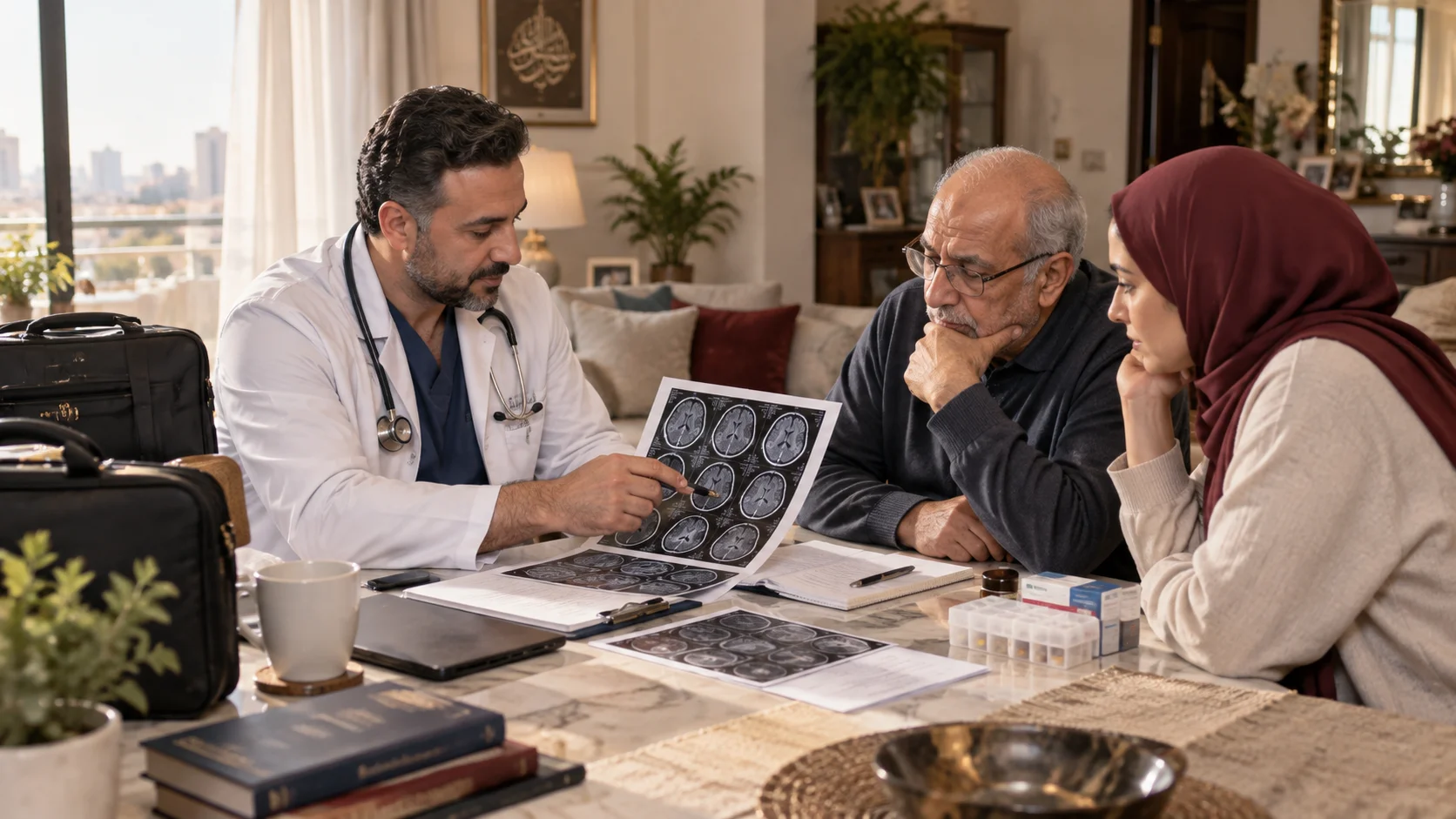
Neurologist reviewing scans, reports and medication during a home visit
Coordination starts before the appointment

How do you book a Home Neurology Visit in Cairo?

01

Send the reason for the visit

Main symptoms, patient age and current mobility level.

02

Send the area and location

This allows the team to confirm coverage and scheduling.

03

Confirm the service type

Clinical assessment, follow-up, or a home test that needs additional equipment.

04

Confirm the appointment

After the team verifies that the home is an appropriate setting for the requested service.

Home coverage in Cairo and selected Giza areas

Visits are coordinated according to the service type, location and current schedule. Send the location before final confirmation so the team can verify coverage and the available appointment.

When should you not wait for a home neurology visit?

A home neurology visit is intended for planned assessment and follow-up, not emergency care. Sudden or severe neurological deterioration needs urgent assessment in an appropriately equipped setting.

  • Sudden weakness or numbness on one side, or sudden changes in speech or awareness.
  • A prolonged seizure or repeated seizures without recovery to the patient's usual state.
  • New loss of consciousness or a rapid decline in responsiveness.
  • Severe breathing difficulty or any situation that appears medically unstable.
Specialist assessment at home

Dr. Karim Ashraf

Consultant Neurologist with experience in neurophysiology and neurological diagnostic testing.

The goal of a home visit is not to recreate a clinic room inside the home. It is to perform the assessment that can be done safely and accurately in the patient's environment, then decide whether the next step can continue at home or requires clinic or hospital facilities.

Doctorate in Neurology — Faculty of Medicine, Ain Shams University.
Neurophysiology training — Cleveland Clinic.
Neurological assessment — within NeuroVisit clinical and diagnostic pathways.
Before arranging the visit

Frequently asked questions about Home Neurology Visits

Is a home neurology visit suitable for older adults?
It may be suitable when travelling is difficult or the patient needs help with mobility, provided the required assessment can be performed safely at home.
Can a neurologist perform a neurological examination at home?
Many parts of a neurological examination can be performed at home, including selected assessments of mental status, movement, strength, sensation, coordination and gait. Some tests still require clinic or hospital equipment.
Is a home visit useful after a stroke?
It can be useful for follow-up after the acute phase has stabilized, especially when mobility is difficult. New sudden neurological symptoms require urgent assessment rather than waiting for a home visit.
Can EEG be performed at home?
Selected EEG recording types may be coordinated outside the clinic when the recording type, equipment and patient situation are appropriate.
Can NCS / EMG be performed at home?
Selected nerve conduction or muscle studies may be available outside the clinic depending on the required equipment, protocol, patient condition and location.
Is home sleep testing available?
Yes, home sleep apnea testing is available for selected patients, but it is not equivalent to full polysomnography and is not suitable for every sleep disorder.
What should I prepare before the visit?
Prepare a medication list, previous reports, scans and laboratory results, and note the main symptoms, when they started and any recent changes. A family member can be helpful if the patient needs assistance communicating the history.
Which areas are covered?
Home visits are coordinated in selected areas of Cairo and Giza according to the schedule and service type. Send the location first so availability can be confirmed.
Does a home neurology visit always replace a clinic visit?
No. Its purpose is to improve access when home assessment is medically appropriate. Some conditions, tests and procedures still require a clinic or hospital.
Is there one fixed price for every visit?
Cost can vary by location and service type, including whether the request is a clinical visit only or includes testing that requires additional equipment. The team confirms the cost before the appointment.

Start by confirming whether a Home Neurology Visit is appropriate

Send the patient's age, main symptoms, mobility level and location. The team reviews the details first so the appropriate service and setting can be coordinated.