
01
Staring and reduced responsiveness
A brief pause in interaction or a partial loss of awareness of the surroundings.
Not every convulsive event is epilepsy, and not every epileptic seizure causes a fall or obvious shaking. Assessment starts with a detailed description of what happened, followed by neurological examination and then the investigations that are relevant to the clinical question, such as EEG or MRI.
An epileptic seizure is a transient event caused by abnormal electrical activity in the brain. It can affect consciousness, movement, sensation or behavior.
Epilepsy is a neurological disease characterized by an enduring tendency to have epileptic seizures. Under the ILAE practical clinical definition, epilepsy may be diagnosed after two unprovoked seizures more than 24 hours apart, after one unprovoked seizure when the recurrence risk is sufficiently high, or when an epilepsy syndrome is diagnosed.
A single convulsive event therefore does not automatically mean epilepsy. Syncope, sleep disorders, metabolic disturbance and cardiac conditions can sometimes resemble seizures.
It can present as brief staring, unusual sensation, automatic behavior or a temporary change in consciousness.
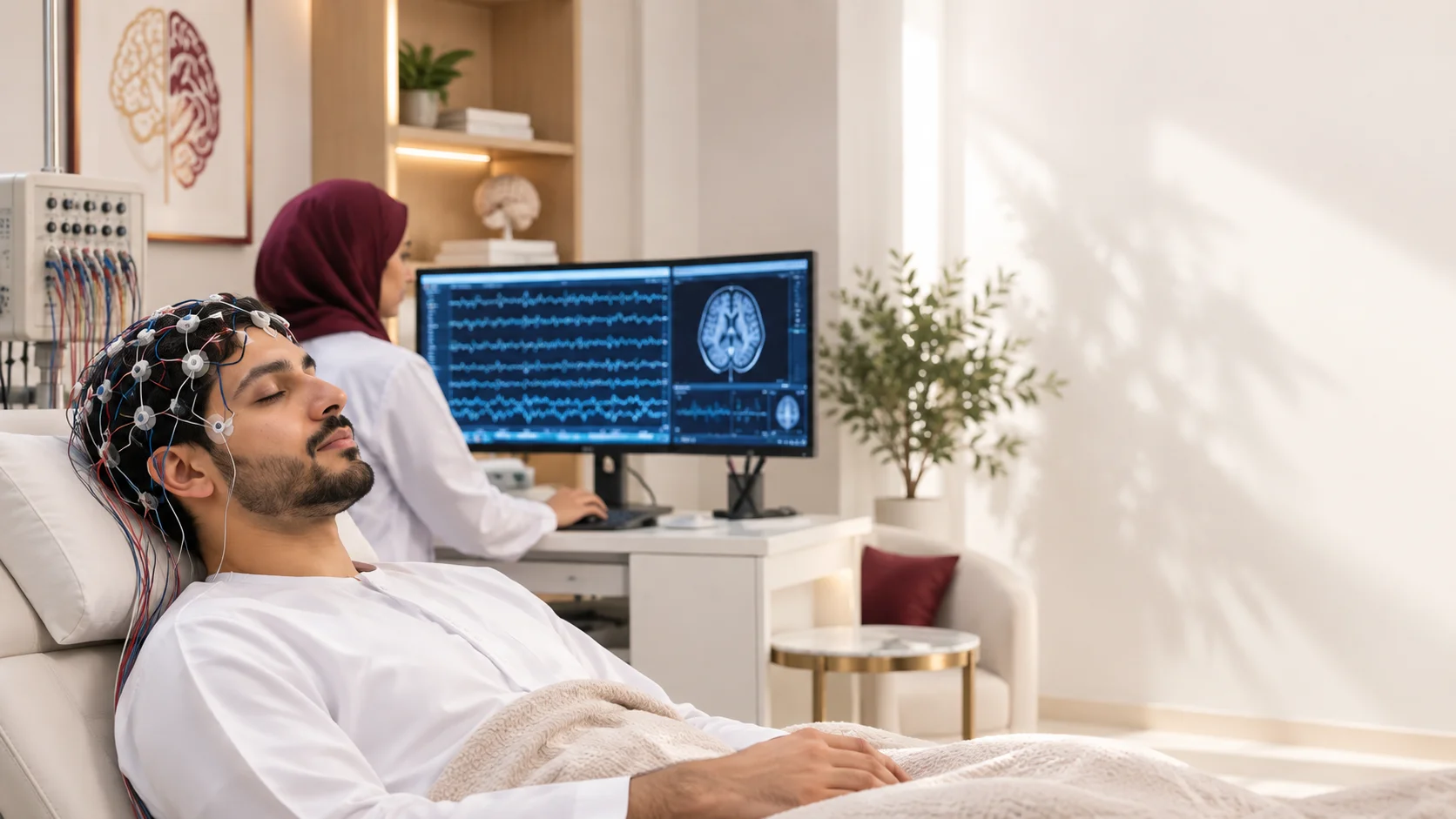
EEG can support diagnosis and seizure classification, but it should not be used alone to exclude epilepsy.
Seizure type, age, likely cause, test findings, other medicines and patient circumstances all affect treatment decisions.
The appearance of a seizure depends on the neural networks involved. The beginning, sequence and duration of the event are therefore important parts of the medical assessment.
A brief pause in interaction or a partial loss of awareness of the surroundings.
Movements may affect one limb or more and can be very brief or more prolonged.
Unusual smell or taste, tingling, visual symptoms or auditory changes.
Repetitive mouth or hand movements associated with altered consciousness or reduced responsiveness.
Some seizures cause loss of consciousness followed by body stiffening and repeated rhythmic limb movements.
Some people need time to regain their usual awareness and concentration after the seizure ends.
The 2025 ILAE classification uses four main seizure classes — focal, generalized, unknown whether focal or generalized, and unclassified — with additional descriptors for observable features and the sequence of symptoms.
Seizures belonging to a focal network class; consciousness and observable features can vary between events.
Seizures belonging to generalized brain-network classes and including different motor and non-motor manifestations.
The event is considered epileptic, but available information is insufficient to determine whether it belongs to the focal or generalized class.
Used when the available clinical information is not sufficient for reliable classification into another class.

No single test answers every question about seizures. The neurologist combines the event description with the clinical examination, then selects tests that can answer specific diagnostic questions.
How did it start? What happened during it? How long did it last? What happened during recovery? A safe video can sometimes help the clinician.
Review medicines, previous conditions, family history and possible provoking or alternative explanations.
EEG can support diagnosis and provide information about seizure type or epilepsy syndrome. Sleep, prolonged, ambulatory or Video EEG may be considered when clinically appropriate.
Assessment may include ECG, laboratory testing or MRI to look for mimics, metabolic causes or structural abnormalities depending on the clinical situation.
No. A routine EEG can be normal between seizures in people who have epilepsy. NICE explicitly advises not to use EEG to exclude a diagnosis of epilepsy. When diagnostic uncertainty remains, the clinician may consider sleep-deprived or ambulatory EEG, or other forms of prolonged recording depending on the case.
The goal is to control seizures while balancing effectiveness, safety, underlying cause, seizure pattern and the patient's individual circumstances.
Medication choice, dose and monitoring vary between patients. Do not start, stop or change the dose of antiseizure medication on your own.
Timing, duration, circumstances and response to treatment provide practical information for follow-up and treatment adjustment.
Sleep deprivation or missed medication can be important for some patients, but triggers differ and there is no single list that applies to everyone.
Selected patients may need specialist evaluation for options such as epilepsy surgery, neurostimulation or specialized dietary therapy within an appropriate epilepsy-care team.
Stay calm and protect the person from injury rather than trying to stop the movements by force.
General educational content that does not replace individual medical assessment.
General discussion of factors related to seizure control and the importance of consistent treatment and follow-up.
An educational discussion about medication and why treatment should not be changed or stopped without medical supervision.

Consultant Neurologist
Epilepsy assessment does not start with an EEG alone. It starts with understanding the event and the context in which it happened, then connecting that information to the neurological examination and relevant investigations.
Book a neurology consultation to review the event description, medical history and previous investigations, and decide the appropriate diagnostic and follow-up pathway.