
Peripheral Neuropathy in Cairo: find the cause behind numbness, burning and nerve pain
Tingling, burning or numbness in the hands and feet is not one diagnosis. Symptoms may come from peripheral neuropathy, a compressed nerve, a nerve-root problem in the neck or back, or a metabolic, inflammatory or other medical cause that needs a different pathway.
At NeuroVisit, assessment starts with the symptom pattern and neurological examination. Blood tests, imaging or NCS / EMG are then selected when they can answer a specific clinical question rather than being ordered automatically.

Peripheral Neuropathy means damage or dysfunction of nerves outside the brain and spinal cord. Symptoms depend on whether sensory, motor or autonomic nerve fibers are affected most.
The cause changes the treatment plan
Rather than assuming every burning or numb sensation has one cause, the pattern is connected to medical history and examination so investigations can be selected according to the most likely explanations.
Diabetes is one of the most common causes of peripheral neuropathy. Thyroid, kidney or liver problems can also be relevant in selected patients.
Selected deficiencies can affect nerve health. High-dose supplementation should not be started randomly before the cause is understood.
Examples include carpal tunnel syndrome, nerve-root compression from the neck or lower back, or direct injury after trauma or surgery.
Autoimmune disease, inflammatory neuropathy and selected infections can affect peripheral nerves and may require a very different treatment pathway.
Selected medicines, including some chemotherapy treatments, as well as toxins and excessive alcohol exposure can contribute to neuropathy.
Some neuropathies are inherited, and in other cases no clear cause is identified despite evaluation.
How is Peripheral Neuropathy and numbness assessed?
Before ordering a test or scan, neurological examination helps identify the pattern of sensory loss, whether muscle weakness is present, how reflexes have changed, and whether symptoms fit one nerve, several nerves or a nerve root.

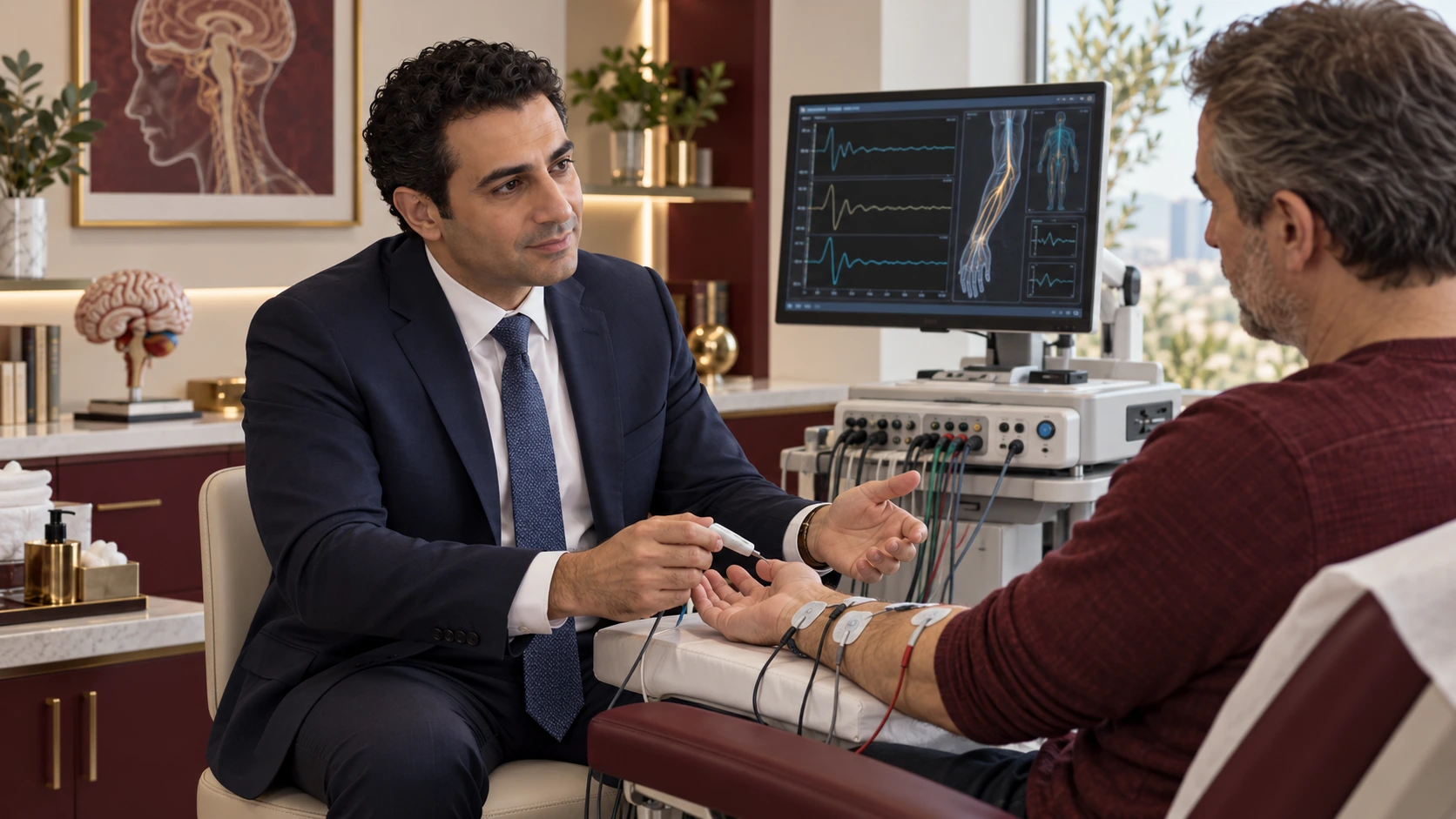
When are NCS and EMG useful in Peripheral Neuropathy?
Nerve conduction studies assess signal conduction through selected peripheral nerves, while EMG records electrical activity in muscles. These tests answer functional questions that are different from MRI or other structural imaging.
From numbness or nerve pain to a clear plan
The aim is not to collect the largest number of tests. It is to choose investigations that answer a defined question and can change management.

If sensation is reduced, protection matters
In some forms of Peripheral Neuropathy, loss of sensation is as important as pain because wounds, heat and repeated pressure can go unnoticed, especially in the feet.
Helpful
Inspect the feet regularly, use appropriate footwear, optimize diabetes control when relevant, and stay safely active according to ability.
Avoid random self-treatment
Do not rely only on painkillers or supplements, and avoid intense heat on areas with reduced sensation before the cause is assessed.
Tell the clinician if numbness affects walking or balance, or if there is a wound you cannot feel normally. These details can change the priorities of the treatment plan.
Peripheral Neuropathy treatment starts with the cause, then reduces its impact
Treatment differs substantially by cause. Treating nerve pain without understanding the source may reduce a symptom while leaving an underlying condition unaddressed.
This may involve better diabetes control, correction of a confirmed deficiency, reviewing a possible medication cause or addressing focal nerve compression according to diagnosis.
Medicines specifically used for neuropathic pain or selected topical treatments can be considered according to symptoms, other health conditions and potential adverse effects.
Physical therapy or hand and foot support can be helpful when weakness, imbalance or movement problems are present.
Follow whether pain is improving, whether strength and sensation are stable, and whether new findings mean the investigation needs to be expanded.

Numbness in one hand is different from numbness in both feet — and sudden symptoms are different from chronic symptoms
One hand
The pattern may suggest focal nerve compression such as carpal tunnel syndrome or a cervical nerve-root problem, depending on distribution and examination.
Both feet symmetrically
This pattern is common in some generalized peripheral neuropathies and should be considered together with chronic conditions and laboratory findings.
Numbness with clear weakness
Weakness or rapid change increases the importance of early assessment and should not be treated as simple numbness alone.
Start with structured neurological assessment instead of trying treatment after treatment
Dr. Karim Ashraf — Consultant Neurologist. The aim of the visit is to connect symptoms with neurological examination and medical history, then select the next step: follow-up, blood tests, NCS/EMG, imaging or treatment according to the case.
Peripheral Neuropathy, numbness and nerve pain — answers before booking
Does every episode of numbness mean peripheral neuropathy?
No. Numbness can result from peripheral neuropathy, a compressed nerve, a nerve-root problem in the neck or back, or other causes. Distribution, timing and neurological examination help identify the most likely direction.
Does every case of numbness need NCS / EMG?
No. NCS and EMG are useful when there is a specific question about peripheral nerve or muscle function. Blood tests, imaging or clinical follow-up may be more appropriate in other situations.
Does NCS / EMG replace MRI?
No. Electrodiagnostic testing measures nerve and muscle function, while MRI shows anatomical structure. Depending on the clinical question, a patient may need one, both or neither.
Can Peripheral Neuropathy improve?
It depends on the cause, duration and type of nerve involvement. Some neuropathies improve when a treatable cause is addressed, while others require symptom control, prevention of further damage and rehabilitation of function.
When is numbness in both feet related to diabetes?
Diabetes is a common cause of peripheral neuropathy, but not every symptom in a person with diabetes is automatically caused by diabetes. Unusual patterns, weakness or rapid changes need assessment for other causes as well.
What should I prepare before the consultation?
Bring a medication list, previous blood tests and reports, any NCS/EMG or imaging, and a short timeline of when symptoms began, where they occur, and whether there is weakness, pain, imbalance or unnoticed foot wounds.
For general information about Peripheral Neuropathy and electrodiagnostic nerve and muscle testing:
This content is for health education and does not provide a personal diagnosis or treatment prescription. Individual assessment depends on medical history, examination and the investigations appropriate for that patient.